Showing posts with label Drift Diving. Show all posts

Monday, December 27, 2010

World Class Diving of Alor Island

Alor Island regency is the least visited and therefore the most unspoiled region of Nusa Tenggara Timur (NTT). Trek to the rim of a volcano on Pantar or dive the straits of Alor and Pantar in a dive destination rated by all to be amongst the best in the world. Ponder on the existence of the Moko drums, which are not found in large numbers anywhere else in Indonesia and can be traced back to the Dongson period in Vietnam around 350 BC and you start to realize that Alor is truly a land lost in time.

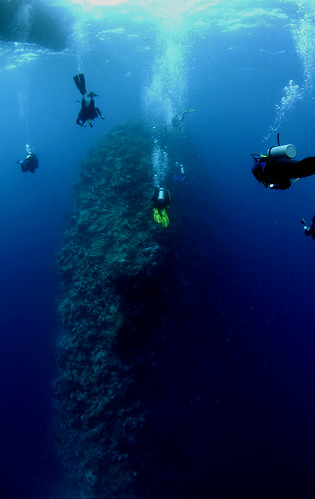
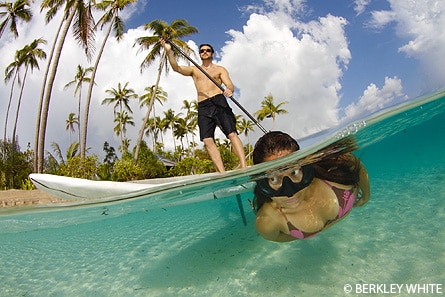
Alor diving is known as the best in the world with its smoldering volcanoes reaching down into crystal clear waters fringed with pristine coral reefs, coconut fringed pure white sandy beaches and traditional villages built half way up mountains, the scenery is as spectacular above as it is below the waterline. Alor Island is so mountainous that it is almost impossible to pass from one side to the other and many of the villages on the island itself can only transport themselves via small wooden ferries. The eight distinct dialects and more than 50 sub-dialects spoken today, testifies to the diversity on Alor. 

Alor traditional culture has been influenced over the ages by the Indian, Chinese and Javanese traders as well as by the Islamic and Christian religions. This can be seen in the silk thread woven into the original weavings and the mix of Mosques and Christian churches dotted throughout the Island. The traditional dances, Ikat weavings motifs and the varies architectural style greatly from area to area. With more than a dozen traditional villages within one hours drive from the capital Kalabahi - Alor is a cultural tourists heaven. [source: Alor]

See The Beauty


Friday, August 20, 2010

Wakatobi Marine National Park


Wakatobi National Park is a marine national park, south-east of Sulawesi island of Indonesia. The name of Wakatobi is an acronym of the four main Tukangbesi Islands: Wangi-wangi, Kaledupa, Tomia, and Binongko. Since 2005 the park is listed as a tentative World Heritage Site.

It consists of four larger islands: Wangi-Wangi, Kaledupa, Tomia and Binongko, as well as many small islands such as Tokobao, North Lintea, South Lintea, Kampenaune, Hoga and Tolandono. The highest elevation is 274 metres (899 ft) on Wangi-Wangi, followed by Lagole Hill (271m) on Tomia, Terpadu Hill (222 m) on Binongko and Mount Sampuagiwolo (203 m) on Kadelupa. The water depth varies, with the deepest parts reaching 1,044 metres (3,425 ft).

The types of vegetation found in the national park are mangrove forest, coastal forest, lowland swamp forest, riverbank vegetation, lowland rainforest, mountain rainforest and coral reefs. The Wakatobi Archipelago has 25 groups of coral reefs including fringing reefs, barrier reefs and atolls. A survey conducted in 2003 identified 396 species of coral belonging to 68 genera and 15 families. These include Acropora formosa, Acropora hyacinthus, Psammocora profundasafla, Pavona cactus, Leptoseris yabei, Fungia molucensis, Lobophyllia robusta, Merulina ampliata, Platygyra versifora, Euphyllia glabrescens, Tubastraea frondes, Stylophora pistillata, Sarcophyton throchelliophorum, and Sinularia species.

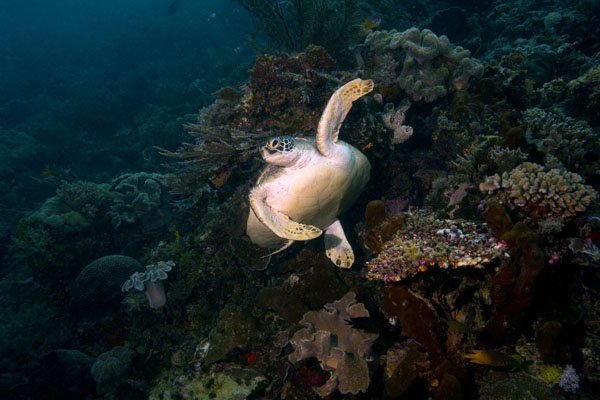
Among the recorded species of seabird are the Brown Booby, Common Kingfisher and Malaysian Plover. Turtles in the park include the Hawksbill turtle, Loggerhead sea turtle, and Olive Ridley. 

The park is one of the best diving destinations in the world with excellent opportunities for drift diving, coral reef exploration and marine life encounters. [source : Wakatobi]

See The Beauty