Showing posts with label South Sulawesi. Show all posts

Friday, August 20, 2010

Wakatobi Marine National Park


Wakatobi National Park is a marine national park, south-east of Sulawesi island of Indonesia. The name of Wakatobi is an acronym of the four main Tukangbesi Islands: Wangi-wangi, Kaledupa, Tomia, and Binongko. Since 2005 the park is listed as a tentative World Heritage Site.

It consists of four larger islands: Wangi-Wangi, Kaledupa, Tomia and Binongko, as well as many small islands such as Tokobao, North Lintea, South Lintea, Kampenaune, Hoga and Tolandono. The highest elevation is 274 metres (899 ft) on Wangi-Wangi, followed by Lagole Hill (271m) on Tomia, Terpadu Hill (222 m) on Binongko and Mount Sampuagiwolo (203 m) on Kadelupa. The water depth varies, with the deepest parts reaching 1,044 metres (3,425 ft).
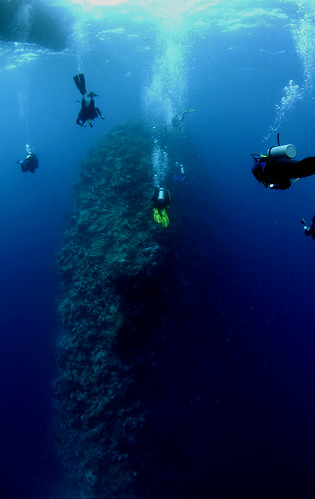
The types of vegetation found in the national park are mangrove forest, coastal forest, lowland swamp forest, riverbank vegetation, lowland rainforest, mountain rainforest and coral reefs. The Wakatobi Archipelago has 25 groups of coral reefs including fringing reefs, barrier reefs and atolls. A survey conducted in 2003 identified 396 species of coral belonging to 68 genera and 15 families. These include Acropora formosa, Acropora hyacinthus, Psammocora profundasafla, Pavona cactus, Leptoseris yabei, Fungia molucensis, Lobophyllia robusta, Merulina ampliata, Platygyra versifora, Euphyllia glabrescens, Tubastraea frondes, Stylophora pistillata, Sarcophyton throchelliophorum, and Sinularia species.

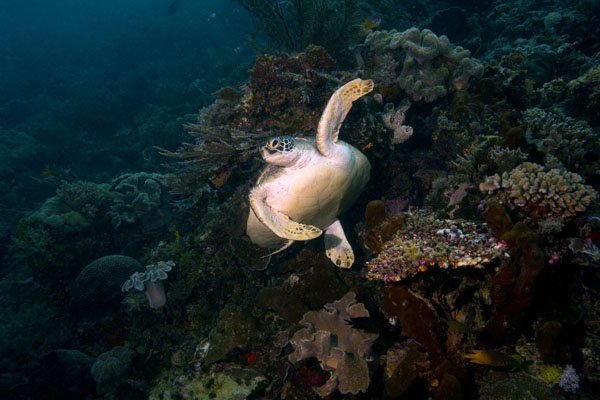
Among the recorded species of seabird are the Brown Booby, Common Kingfisher and Malaysian Plover. Turtles in the park include the Hawksbill turtle, Loggerhead sea turtle, and Olive Ridley. 

The park is one of the best diving destinations in the world with excellent opportunities for drift diving, coral reef exploration and marine life encounters. [source : Wakatobi]

See The Beauty


Saturday, June 26, 2010

Tana Toraja

The Toraja are an ethnic group indigenous to a mountainous region of South Sulawesi, Indonesia. Their population is approximately 650,000, of which 450,000 still live in the regency of Tana Toraja ("Land of Toraja"). Most of the population is Christian, and others are Muslim or have local animist beliefs known as aluk ("the way"). The Indonesian government has recognized this animist belief as Aluk To Dolo ("Way of the Ancestors").

Torajan Graves
The word Toraja comes from the Bugis language's to riaja, meaning "people of the uplands". The Dutch colonial government named the people Toraja in 1909. Torajans are renowned for their elaborate funeral rites, burial sites carved into rocky cliffs, massive peaked-roof traditional houses known as tongkonan, and colorful wood carvings. Toraja funeral rites are important social events, usually attended by hundreds of people and lasting for several days.
Torajan Baby Graves

Before the 20th century, Torajans lived in autonomous villages, where they practised animism and were relatively untouched by the outside world. In the early 1900s, Dutch missionaries first worked to convert Torajan highlanders to Christianity. When the Tana Toraja regency was further opened to the outside world in the 1970s, it became an icon of tourism in Indonesia: it was exploited by tourism developers and studied by anthropologists. By the 1990s, when tourism peaked, Toraja society had changed significantly, from an agrarian model — in which social life and customs were outgrowths of the Aluk To Dolo—to a largely Christian society. [source : Tana Toraja]

See The Beauty

Torajan Villages

Toraja Rice-field
Toraja Funeral Rites

Toraja Traditional House