Showing posts with label Lake. Show all posts

Friday, October 8, 2010

Kawah Putih Ciwidey : Beautiful White Crater Lake

Kawah Putih (English : white crater) Ciwidey located in approximately 46 km southern Bandung city, West Java, Indonesia. It formed by the active volcano of Mount Patuha, situated 2,343 meters above sea level. This crater was formed between the 10th to 12th centuries by the eruption of Mount Patuha.

Kawah Putih Ciwidey seems looks like a lake surrounded by mountains. The water is warm and has a high sulfur content, and the sunshine frequently change the color of the water from milky white into bluish green. But commonly the water colored white with a high volume smoking haze above land surface. Beside the crater, sand and stone around it also dominated in white, that's why it named with Kawah Putih (white crater). It's a stunning natural attraction.

At Kawah Putih, you can also find a number of stalls selling bandrek, a traditional Sundanese beverage made from ginger and palm brown sugar. This beverage is highly suitable for cold weather, as drinking bandrek will warm your body.

See The Beauty


Saturday, August 14, 2010

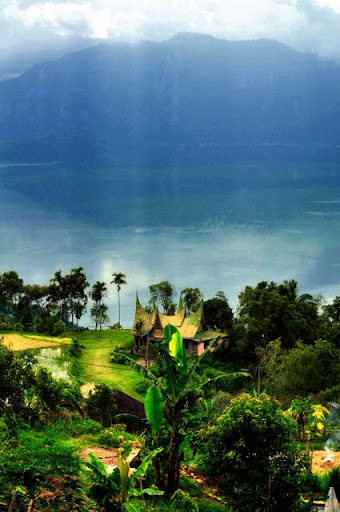
Lake Maninjau

Lake Maninjau (Indonesian: Danau Maninjau, meaning overlook or observation in Minangkabau) is a caldera lake in West Sumatra, Indonesia.
 
Lake Maninjau has an area of 99.5 km², being approximately 16 km long and 7 km wide. The average depth is 105 m, with a maximum depth of 165 m. The natural outlet for excess water is the Antokan river, located on the west side of the lake. It is the only lake in Sumatra which has a natural outlet to the west coast. Since 1983 this water has been used to generate hydroelectric power for West Sumatra.

Most of the people who live around Lake Maninjau are ethnically Minangkabau. Villages on the shores of the lake include Maninjau and Bayur.

Maninjau is a notable tourist destination in the region due to its scenic beauty and mild climate. It is also used as a site for paragliding. [source : Maninjau]

See The Beauty


Monday, May 31, 2010

Lake Toba : the largest volcanic lake in the world

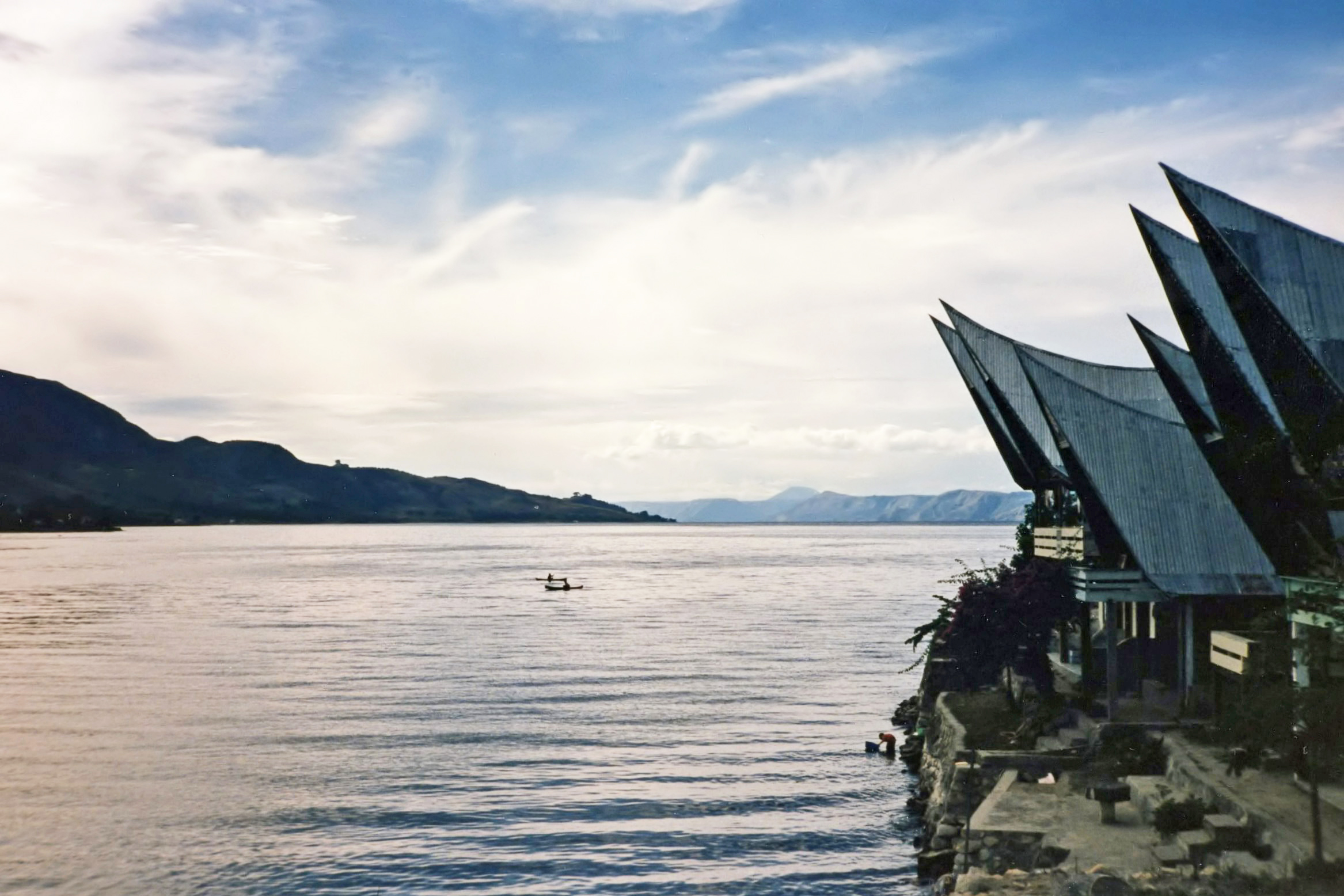
Lake Toba (Indonesian: Danau Toba) is a lake and supervolcano, 100 kilometres long and 30 kilometres wide, and 505 metres (1,666 ft) at its deepest point. Located in the middle of the northern part of the Indonesian island of Sumatra with a surface elevation of about 900 metres (2,953 ft). It is the largest volcanic lake in the world.

Lake Toba is an immense volcanic lake covering an area of 1707 sq km (bigger than Singapore) with an island in the center. Formed by a gigantic volcanic eruption some 70,000 years ago, it is probably the largest resurgent caldera on Earth. Some studies say it might have been associated with causing previous ice age/climate change and the largest human population bottleneck ever. Genetic estimates suggests that there where only a few thousand individuals that survived the catastrophe. The island in the middle - Pulau Samosir - was joined to the caldera wall by a narrow isthmus, which was cut through to enable boats to pass; a road bridge crosses the cutting. Samosir island is the cultural centre of Batak tribe.
Lake Toba is a beautiful and unique place to visit in Indonesia. It is just a few hours drive from Indonesia’s third largest city Medan. Medan has flights from Kuala Lumpur, Penang, Jakarta and Singapore and many other cities in Indonesia.

There is so many tourism attractions around Lake Toba :

Tuk Tuk
Tuk Tuk is the main tourist center on Samosir Island. It is a pleasant place for walking around, shopping and admiring the views over Lake Toba.
Tomok
Tomok is about 5km from Tuk Tuk on Samosir Island. It is the main area that locals live. It is a good place for buying souvenirs and eating local food. In Tomok you can see the grave of King Sidabutur. He was the Batak King that introduced Christianity to the Batak people.
Ambarita
Ambarita is famous for the “stone chairs”. The stone chairs are around 300 years old where a kind of court was held to decide the fate of criminals. Serious crimes were dealt with harshly. The criminals were beaten and their bodies rubbed with lemon and chilli to make their wounds more painful and finally they were beheaded and their bodies thrown into Lake Toba.
Blood and some meat of the criminal was eaten by the king and the villagers. One of the guides is a direct descendant of the former king of the village.
Museum Huta Solon Simanindo
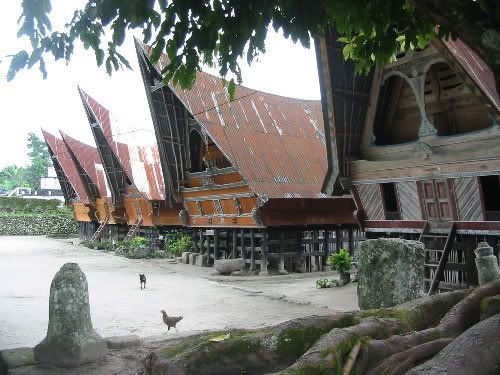
A visit to the museum is a must for anyone wanting to explore Batak culture and tradition. There are some good examples of traditional Batak houses. There are Batak dancing performances held from Monday to Saturday at 10:30 am. Audience participation is more than welcome!
Hot springs
The hot springs located around 40km from Tuk Tuk and is a scenic drive to get there. The water from the hot springs is not surprisingly very hot!
Swimming in Lake Toba
Lake Toba is great for swimming and cooling off. The water is a little chilly but as they say, it’s fine once you get in. The water is deep, but a few hotels have created their own swimming areas in the lake to make it safe for people with young children.
 
for detailed info visit http://www.laketoba.info/

See The Beauty

Wide Open View
Aerial View
Traditional House Design

Friday, May 14, 2010

Mount and Lake Batur

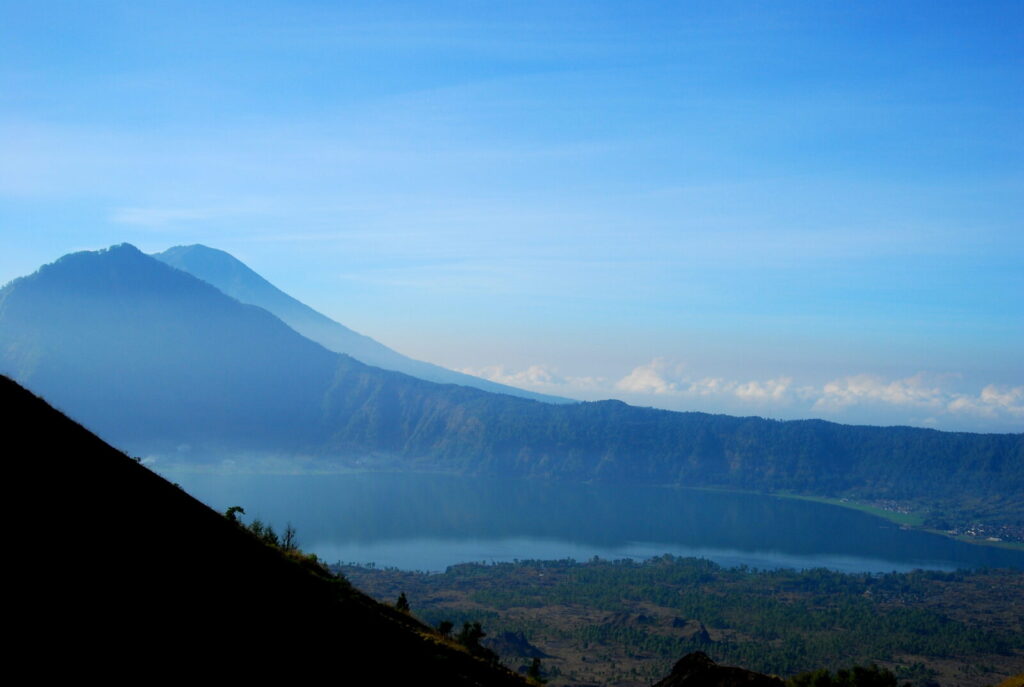
Mount Batur (Gunung Batur) is an active volcano located at the center of two concentric calderas north west of Mount Agung, Bali, Indonesia. The south east side of the larger 10×13 km caldera contains a caldera lake. The inner 7.5-kilometer-wide caldera, which was formed during emplacement of the Bali (or Ubud) ignimbrite, has been dated at about 23,670 and 28,500 years ago.

The SE wall of the inner caldera lies beneath Lake Batur; Batur cone has been constructed within the inner caldera to a height above the outer caldera rim. The Batur stratovolcano has produced vents over much of the inner caldera, but a NE-SW fissure system has localized the Batur I, II, and III craters along the summit ridge. Historical eruptions have been characterized by mild-to-moderate explosive activity sometimes accompanied by lava emission. Basaltic lava flows from both summit and flank vents have reached the caldera floor and the shores of Lake Batur in historical time. The caldera contains an active, 700-metre-tall stratovolcano rising above the surface of Lake Batur. The first historically documented eruption of Batur was in 1804, and it has been frequently active since then.

The caldera is populated and includes the two main villages of Kedisan and Toya Bungkah. The locals largely rely on agriculture for income but tourism has become increasingly popular due to the relatively straightforward trek to the summit of the central crater.

The mountainous region around Kintamani, centering on the spectacular volcanic caldera of Mount Batur with its deep crater lake and bubbling hot springs, is rugged with a high and wild beauty.

Wonderful mountain air and dizzying views in all directions, as well as several important temples, are what makes Kintamani one of the most memorable stops on the Bali tourist itinerary.

The lake, Danau Batur, is the largest crater lake on the island of Bali and is a good source of fish. 

As the road rises steadily from Bangli or Tampaksiring, nothing in the surrounding grey landscape of bushes and garden plots suggest the presence of a volcano. But over, one more small ridge a dizzying view awaits the eyes, encompassing the crater and beyond. From Penelokan, the main road runs right round the rim towards Kintamani, the panorama shifting as circling around the crater.

See The Beauty
Blue Mountain

 Sunrise Over The Lake

 Over The Clouds